
Should You Worry That Microplastics Will Cause Heart Attacks?
It is too early to tell if this is an association or causation.

Reading medical literature these days is like watching the movie “ Ground Hog Day.” I feel like Bill Murray waking up to a new day unfolding like the last one. Yet another study would like us to believe that microplastics in our arteries cause heart attacks. Again, for the hundredth time, association does NOT equal causation. More on this later.
The existential dilemma is that living in our modern world makes avoiding all microplastic ingestion impossible. They are everywhere, from the straws and cups we drink from to the take-home tubs of food or delivery services. The grocery stores pack everything in plastic. We use plastic plates and eating utensils. Even our pills come in plastic bottles.
When they are under physical and thermal stress, plastics break down and create microscopic shards known as microplastics. They have been found in the oceans, inside the fish we eat and even at the summit of Mt. Everest. They are also in the air and soil.
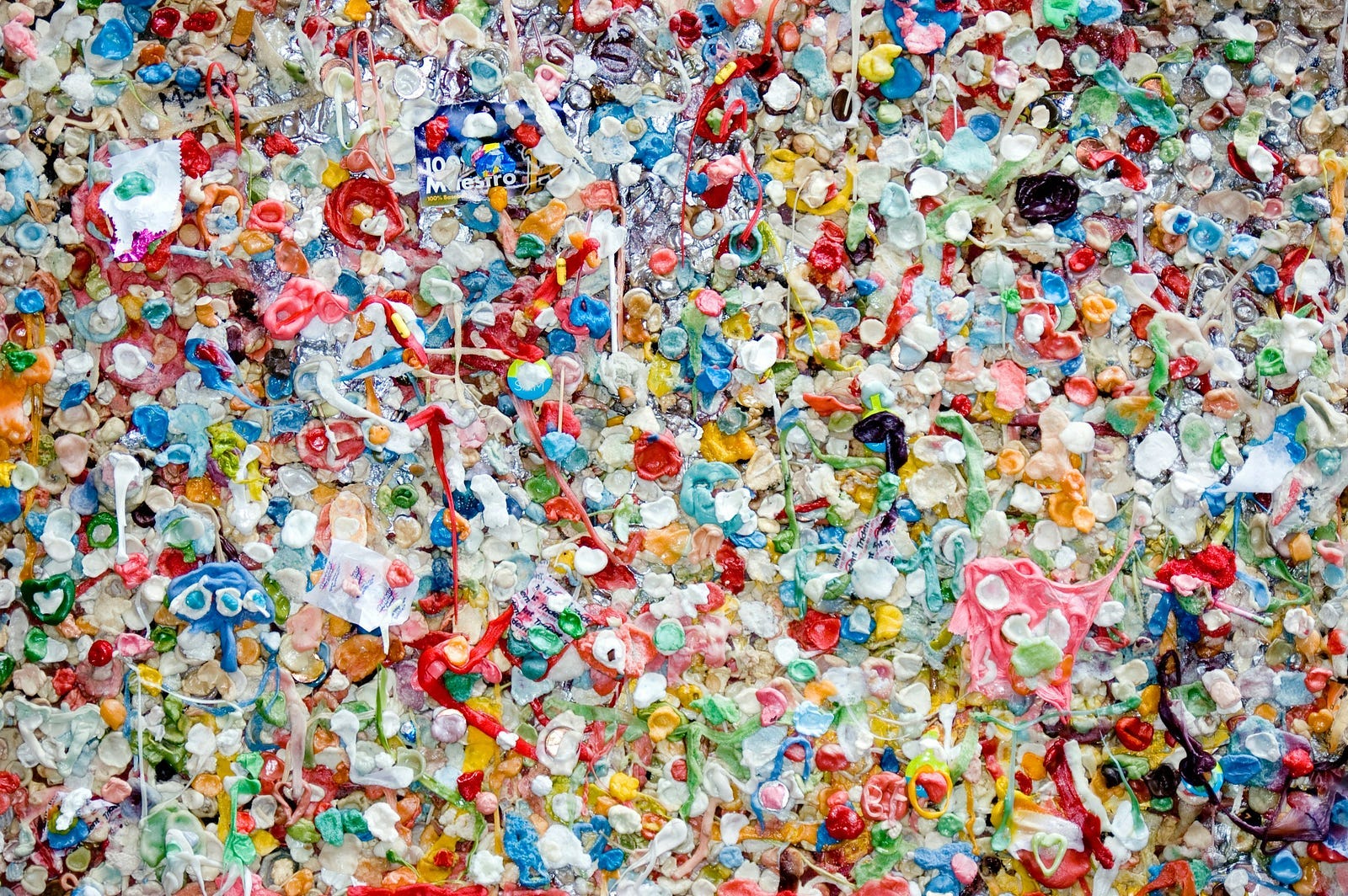
The tiny materials shown in the above photo are microplastics. There are micro and nanoplastics (MNP). Here’s the difference:
Micro (μ): Represents one millionth (10⁻⁶ or 0.000001) of a base unit.
Nano (n): Represents one billionth (10⁻⁹ or 0.000000001) of a base unit.
Conversion: Micro is 1,000 times larger than nano (1 micrometer equals 1,000 nanometers).
They have been found inside the carotid (neck) arteries and now all of the other arteries in our bodies. People with more of them also had more heart attacks and strokes. Now, the lay press is on fire with a new study that affirms the more MNP found in your arteries, the more heart attacks and strokes you have.
It is easy to conclude that these tiny foreign objects cause these events. However, is that true? In other words, does their presence in the walls of our arteries lead to heart attacks and strokes, or are they only associated with it? And if there is an association, then what is it?
This newest study measured the levels (quantity) of MNP in the blood moving through the coronary (heart) arteries, which supply oxygen and nutrients to the heart. Spasm, inflammation, blood clots and total blockages of these arteries lead to heart attacks. MNP levels were highest in heart attack patients, compared to other patients.
Among those who had heart attacks, micro and nanoplastics were detected in 84% of patients, compared with 40% of patients with chronic ischemic heart disease and 32% of patients with normal coronary arteries. Heart attack patients had a greater variety of plastic types in their blood. The most common type of plastic was polyethylene, which is commonly used in packaging and consumer products.
Furthermore, smokers and people exposed to more air pollution had higher levels. This is unsurprising since MNPs are found in the air as well as in cigarette filters.
But if it’s not the MNPs that are causing these bad events, what else could it be? They certainly could be a cause since patients with higher levels of MNPs had more inflammation and inflammatory blood markers. And inflammation is associated with more heart attacks and strokes. However, I would like to see more prospective data, such as feeding animals with MNPs and seeing if they too have more heart attacks and strokes.
It turns out there is some preliminary data in this regard. A research team at the University of California, Riverside placed mice on a low-fat and low-cholesterol diet. The team then administered microplastics daily (10 milligrams per kilogram of body weight) for nine weeks. This amount reflects levels that could realistically be encountered through contaminated food and water.
The results showed a sharp increase in atherosclerosis, but only in males. Male mice exposed to microplastics developed 63% more plaque in the aortic root, the segment of the aorta connected to the heart, and 624% more plaque in the brachiocephalic artery, a major vessel branching from the aorta in the upper chest. Female mice exposed to the same conditions did not show significant plaque progression.
The study also showed that microplastics interfered with the function and makeup of cells lining the arteries.
Thus, the role of MNPs could be contributing to heart attacks and strokes. Yet, if this were to be true, then how to account for the fact that heart attacks and strokes are becoming less, not more, frequent? Certainly, the amount of MNPs in our environment is not getting any smaller.
Perhaps there are other factors in patients’ lifestyles that are leading to more bad cardiovascular events. For example, it is not a far-flung theory to suggest that people who ingest more fast foods also use plastic utensils and perhaps eat more ultra-processed foods. This is only one example and an unproven theory.
My conclusion now is that it is too soon to know if this is a true cause or only an association. It is impossible not to have these chemicals in our bodies since they are ubiquitous. You can only control what you can control.
For me, I try to avoid plastic water and beverage bottles as often as possible. My wife and I have switched over from plastic food storage containers to glass. We use compostable paper plates at home rather than plastic when we are not using china plates. You get the idea.
The food and beverage industry might be getting the message as well. We were recently out west touring a national park. The tour guide supplied us with filtered water in metal cans rather than plastic.
Until more definitive research is done, only modifying our lifestyles will help cut down the amount of these potentially harmful chemicals we ingest.
Well written post that did well holding line berserk causation and association.
I’ve been interested in the microplastic debate for years now and wrote heavily on the topic while taking MPH classes. Mostly on endocrine/reproductive health. It seems like shoulders are still fairly shrugged on what’s been truly established by science.
One thing I would add, since you brought up the size difference. There is now a small industry selling saunas to sweat microplastics out. And popular biohackers claims to have “cured microplastics” in their system using sperm analysis. Last I checked whether we can sweat out an entire particle is not established science.
The chemical side is a different question, and even there it is 20 people in one small study (PMID 22253637). Interesting, not much more.
I still sit in the sauna most weeks. That is for the cardiovascular data, and I would keep doing it even if the plastic question goes nowhere.